
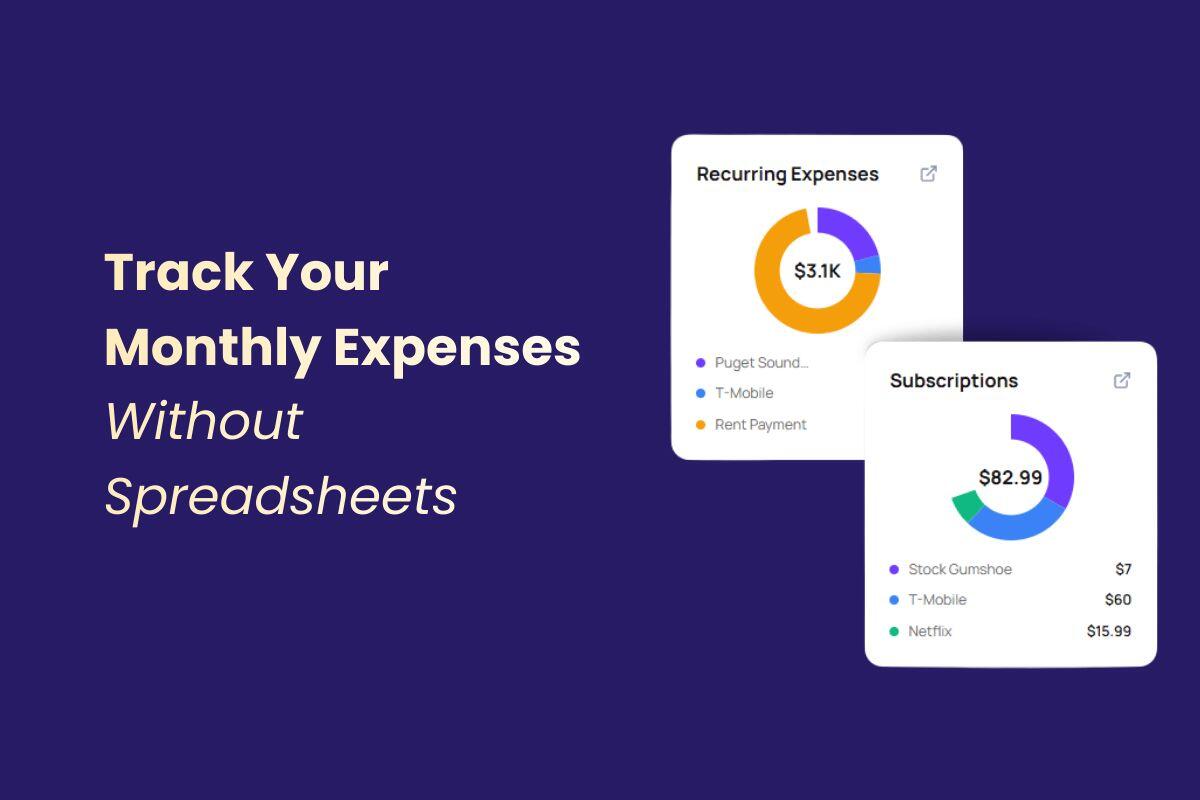
Can you account for every dollar you spend each month?
Most people view expense tracking as a tedious chore they'd rather skip. A budgeting app stands out as the best expense tracking solution. These apps offer convenience, handle calculations automatically, and link directly to your bank accounts. Many people try spreadsheets initially, but these tools often end up abandoned and outdated.
Regular expense monitoring provides a clear snapshot of your spending patterns and helps redirect your money where you want it. The process isn't complicated, but it requires consistent practice to become a habit. Your monthly budget typically splits between fixed costs that stay stable and variable expenses that fluctuate.
Money management becomes a guessing game without proper tracking. This piece will guide you through effective monthly expense tracking methods that don't rely on spreadsheets. You'll learn about taking control of your finances with minimal effort.
Why Tracking Your Monthly Expenses Matters More Than You Think
People often don't realize how crucial it is to track where their money goes each month. Expense tracking isn't just about staying organized-it helps you control your finances and create opportunities to grow your wealth.
The hidden cost of 'not knowing where your money goes'
Your finances drain silently through hidden expenses that slip by unnoticed. Small costs like forgotten subscriptions and impulse purchases add up quickly. Financially successful people share one simple trait: they watch their money closely, while those who struggle rarely check their spending.
You might be spending thousands each year on services you barely use or completely forgot about. Looking back at your spending from last year can shock you-people usually guess they spend half of what they actually do on everyday items. Nobody notices these "set it and forget it" expenses without regular checks of their financial statements.
Why most people fail at budgeting (and why spreadsheets don't stick)
Traditional budgeting fails because it focuses on restrictions instead of reality. People feel discouraged when their budget doesn't help them save or cut costs. Spreadsheet tracking comes with several problems:
- It needs too much manual work
- People miss transactions and delay updates
- The tracking stops after just 30 days
Budgets that restrict you too much-like cutting out coffee or dinner with friends-don't last long. Financial experts compare failed budgets to crash diets: the original excitement fades once you feel deprived of things you enjoy.
How expense tracking builds better saving habits automatically
Good expense tracking helps you stay debt-free and reach your money goals. Yes, it is easier to make meaningful changes to your cash flow once you know where each dollar goes. This awareness comes without guilt and lets you:
- Spot wasteful spending patterns
- Move wasted money into savings or investments
- Create realistic monthly limits based on your habits
Investmates gives you a spreadsheet-free solution that sorts your expenses from all accounts and shows your spending live instead of surprising you at month-end. Better financial habits develop naturally as you stay aware of your spending without doing calculations or data entry yourself.
What Monthly Expense Tracking Really Means
Expense tracking goes beyond simple budget categories. You need to know where every dollar goes and how it affects your financial well-being.
Fixed vs variable expenses (and why both matter)
Fixed expenses stay the same each month, which makes planning easier. Your mortgage or rent payments, gym memberships, insurance premiums, streaming services, phone bills, internet costs, and childcare fall into this category. These expenses remain predictable, though some might increase yearly, like streaming services that raise prices after your first year.
Variable expenses change monthly based on your lifestyle and usage. These include utilities, groceries, dining out, entertainment, gasoline, and medical costs. These costs are harder to predict and control because they change often.
Your financial health depends on both types of expenses. Fixed expenses build a stable foundation for your budget. Variable expenses give you room to adjust when needed. Tracking both types helps you see the complete picture of your spending habits.
Needs, wants, and lifestyle leaks
Much of your paycheck goes to needs - everything you must have to live and work. This includes housing, basic transportation, groceries, and healthcare.
Wants are things that make life more comfortable but aren't necessary. These include dining out, designer clothing, gym memberships, and specialty coffee. They usually count as variable expenses in your budget.
Lifestyle creep happens when you start seeing luxuries as necessities because you earn more. You might notice food delivery doesn't feel special anymore, your closets overflow with unused items, or you keep subscription services you rarely use.
How small expenses quietly derail savings goals
Small purchases add up to create a big financial effect. That daily $4.00 coffee costs about $104.00 monthly or $1,248.00 yearly. Skipping just one $20.00 restaurant meal each week saves around $780.00 per year.
People often miss these "lifestyle leaks" until they track them carefully. Most underestimate their daily spending by more than double. The truth becomes clear only after reviewing past transactions.
Investmates helps by sorting expenses from all your accounts automatically. You get immediate insights into your spending patterns without spreadsheets or manual tracking. The app finds hidden expense patterns to help you make smarter decisions about your money.
Budgeting Is Not About Cutting Expenses. It's About Control
High earners making six figures often live paycheck to paycheck and struggle to save money, even with substantial income. Money management success depends more on controlling your spending than your earnings.
Budgeting vs expense tracking: what's the difference?
People commonly mix up expense tracking and budgeting, though each serves a unique purpose. Tracking expenses is passive, you simply record your spending to see your financial habits. Recording and categorizing purchases helps, but these actions alone won't shape your future spending decisions.
Budgeting takes a proactive approach to money management by planning your spending before money leaves your account. While tracking looks at past spending, budgeting creates a forward-looking plan based on your goals and income. This key difference shapes your path to financial security.
Why saving comes after tracking, not before
Your savings should be a priority, whatever your income level. Yet many people try to save money without understanding their spending patterns.
Expense tracking builds your financial awareness first. A clear picture of your spending habits helps you spot unnecessary expenses that could go toward savings instead. The order matters here, trying to save without knowing your spending habits usually ends in disappointment.
How tracking creates awareness without guilt
A financial journal helps you stay accountable for your spending choices. Writing down what you buy and why reveals emotional triggers and impulse purchases that apps might not catch. This awareness can change your habits naturally, without making you feel bad.
Regular tracking gives you control without restricting your choices. The goal isn't to stop all fun spending but to make choices that match your priorities.
Investmates makes tracking simple with automatic transaction categorization in all your accounts. This smart expense tracker shows your spending patterns live, without the manual work that makes most people quit tracking after just 30 days.
The Problem With Tracking Expenses Using Spreadsheets
Spreadsheets might seem like an obvious choice for expense tracking, yet studies reveal a startling truth: 88% of all spreadsheets contain major errors. This basic problem makes them unreliable tools for managing finances.
Manual effort and inconsistency
Spreadsheets just need constant manual data entry, which creates perfect conditions for mistakes. Users must carefully copy and paste every update, which increases the risk of typos and wrong calculations. On top of that, manual spreadsheet work involves gathering and checking data from multiple systems. Users must build formulas, create charts, and share final files with colleagues, a process that wastes time and leads to errors. A single wrong cell can mess up your entire financial record. Fannie Mae learned this the hard way in 2003, when a spreadsheet error forced the company to restate roughly $1.1 billion in stockholders' equity.
Missed transactions and delayed updates
Your spreadsheets only show a static picture of expenses at any moment. This information gap means you work with outdated financial data. Combining information from multiple sources by hand creates delays that affect your decisions. Critical information reaches users late because gathering data and creating spreadsheets takes too long. These delays often lead to missed opportunities and extra costs that quietly drain your finances.
Why most people stop updating spreadsheets after 30 days
At first, spreadsheets seem easy to handle, especially with few expenses. Problems start piling up as months go by. The work needed to maintain them grows quickly, you need to review transactions, find errors, and calculate figures outside your main system. People end up abandoning spreadsheet tracking after just a month because it takes too much time.
Investmates gives you a no-spreadsheet solution that sorts your expenses from all accounts automatically. You get up-to-the-minute visibility into your spending patterns without the manual work that makes most tracking attempts fail.

How to Track Monthly Expenses Without a Spreadsheet
Modern expense tracking technology gives you better options than spreadsheets. Investmates lets you track expenses without spreadsheets by watching your spending automatically on all your accounts. You won't need to enter data manually anymore.
Using bank and account integrations
Today's expense trackers link directly to more than 10,000 financial institutions worldwide. These tools automatically import transactions by connecting your checking, savings, credit cards, and investment accounts. For NRIs, this matters more than most people realize: your money lives in two countries with two different banking systems, and most budgeting apps built for a single-country audience can't bridge that. Investmates connects to Indian accounts through Account Aggregator and to US accounts through Plaid, pulling both sides of your financial life into one dashboard instead of leaving you to manually reconcile a US budgeting app with a separate Indian one.
Automatic categorization of expenses
AI systems identify and sort your expenses based on where you shop and how you spend. The system learns your habits and automatically puts transactions in the right categories with better accuracy as time passes. This removes the need to label each purchase by hand.
Real-time visibility vs month-end surprises
Modern tracking tools send instant alerts for new transactions, unlike monthly statements with old information. This quick visibility helps catch policy violations early. You can enforce spending limits and spot unusual activity before problems grow.
Tracking expenses across multiple accounts in one place
Unified dashboards bring data from all your financial accounts to give you a complete view. You can analyze your spending by categories, merchants, and time periods without jumping between different apps.
Why this matters more if you live across two countries
A generic budgeting app assumes all your spending happens in one currency, in one country, through banks that all report to the same tax system. NRIs and global Indians don't have that luxury. You might have a US checking account, an Indian NRE savings account, a mortgage payment in India, and rent in the US, all in different currencies, all invisible to each other unless something specifically brings them together. Currency conversion alone can make a "simple" monthly budget misleading if your tracker doesn't handle it automatically. This is the specific gap Investmates is built to close.
If you are choosing a budgeting app, our comparison of Monarch Money and YNAB shows how an automated tracker differs from a hands-on budgeting method, and our beginner's guide to using AI for personal finance explains what automatic categorization actually does with your transactions.
How Expense Tracking Helps You Save Without Trying Harder
Have you ever heard of Pearson's Law? It states that "When performance is measured, performance improves. When performance is measured and reported back, the rate of improvement accelerates". This simple principle shows why tracking your expenses naturally leads to better savings.
Identifying unnecessary spending patterns
You'll find surprising patterns when you look at your spending data. Most people realize they pay for subscription services they never use or buy things on impulse that don't add much value. A small USD 50.00 monthly drain creates USD 600.00 yearly that could help with emergencies or investments.
Redirecting wasted money into savings or investments
The money you save from cutting wasteful spending can go straight to your financial goals. Smart tracking tools show exactly where your money goes and help stop these financial leaks. The money you used to waste on forgotten subscriptions can now automatically flow to your long-term goals.
Setting realistic monthly spending limits
Your true spending patterns emerge through effective tracking, which helps create realistic budgets. These boundaries work better than random limits because they match your actual habits. You'll likely stick to limits that fit your lifestyle while helping you improve gradually.
Tracking progress without manual calculations
Smart tools have eliminated the need for manual calculations or data entry. They gather information from accounts of all sizes and let you see everything on one dashboard.
Investmates gives you a spreadsheet-free solution that automatically sorts your expenses from all accounts. This provides immediate insight into your spending patterns without the hassle that makes most tracking attempts fail.
Mistakes That Stop People From Sticking to Expense Tracking
Even highly motivated people can struggle to track their expenses. Learning about these common mistakes can help you build lasting tracking habits.
Tracking too many categories
People often create too many categories when they start their expense tracking experience. One person tried using more than 45 different categories until it became too much to handle. Breaking down every USD 400 receipt from stores like Costco or Amazon into multiple categories isn't sustainable. A finance professional points out that "Too much detail ends up with less control". You should focus on 10-15 meaningful categories that give you useful information without causing burnout.
Obsessing over perfection
Financial perfectionism often shows up as procrastination, you might delay tracking because you're afraid of making mistakes. This mindset creates a paralyzing fear that stops you from tracking regularly. A financial therapist explains that perfectionism "actually gets in the way of our success". It's worth mentioning that you can't be perfect, you'll miss some expenses and unexpected costs will pop up. Your goal isn't perfect tracking but better awareness and progress.
Reviewing expenses only once a year
Regular review is vital to manage expenses effectively. Annual expense checks create huge gaps in your financial awareness. Financial experts suggest comparing your expenses with bank statements monthly. This helps catch small errors before they grow larger. Monthly monitoring helps you spot patterns and adjust your spending habits quickly.
Ignoring recurring subscriptions and silent charges
Americans waste nearly USD 40 monthly on unused subscriptions, almost USD 500 disappears yearly without notice. These "ghost subscriptions" sneak into your budget through auto-renewals and small charges that seem harmless on their own. Small charges like USD 9.99 streaming services or USD 4.99 app subscriptions add up to over USD 500 yearly. Auto-renewal features quietly take money from your account without warning. These expenses can seriously damage your financial goals.
Investmates gives you a no-spreadsheet solution that automatically tracks and categorizes all your expenses across accounts. It spots recurring charges before they drain your finances. This smart tracking app helps you stay aware of your spending without the effort that makes most tracking attempts fail.
An Easier Way to Track Your Monthly Expenses Automatically
Modern technology has transformed financial management. Now you can track expenses without struggling with data entry or complex spreadsheets.
Smart expense tracker apps work differently than old-school methods. They link straight to your bank accounts and credit cards. These tools track and sort your spending automatically. You get a clear view of your habits without lifting a finger. Most trackers can connect with more than 10,000 financial institutions worldwide and import your transactions instantly.
Simple tracking is just the start. These apps pack powerful features:
- Automatic categorization saves you countless hours
- Live updates help you avoid surprises at month-end
- Cross-account visibility puts your finances in one place
- Pattern recognition spots trends you might otherwise miss
The best tracking apps let you check transactions, understand category spending, and get monthly updates about your money habits. Many apps also include resources that boost your financial knowledge.
Investmates takes the spreadsheets out of the equation. The app tracks and sorts expenses from all your accounts automatically. This smart system brings everything together in one clear view. You stay in control without the hassle that makes most people give up on tracking.
Conclusion
Monthly expense tracking is the life-blood of financial well-being. Your original plan might be to use spreadsheets, but they soon become a hassle because of manual errors, inconsistent entries, and boring data input. Most people give up on spreadsheets after just 30 days, and their financial picture goes dark again.
You'll find automated expense tracking works much better. Instead of fighting with old-school methods, you can use technology that links to your financial accounts and sorts transactions on its own. This gives you up-to-the-minute insights into your spending habits without the hassle that makes most tracking attempts fail.
Good financial awareness helps you make better money decisions. When you know where your money goes, you can spot wasteful spending, move extra cash to savings, and create realistic limits based on your habits. Expense tracking becomes less about cutting back and more about making choices that match your goals.
Without doubt, the best way to track expenses combines simplicity with consistency. Investmates gives you just that, a spreadsheet-free solution that sorts all your expenses from different accounts and shows both fixed costs and variable spending in one clear dashboard. This smart system helps you avoid common mistakes that stop people from tracking their finances long-term.
Note that tracking expenses isn't about being perfect or going without. It's about taking control and making smart money choices. Start tracking now, and you'll build better money habits naturally, while watching your savings grow and money worries fade.
Frequently asked questions
What's the simplest way to track monthly expenses without using spreadsheets?
Using a budgeting app that connects to your bank accounts is the easiest way to track expenses. These apps automatically categorize transactions and provide real-time visibility into your spending patterns without manual data entry.
How can I stick to expense tracking long-term?
Make expense tracking a daily habit by using a user-friendly app or method that fits your lifestyle. Set aside a few minutes each day to review and categorize transactions. Consistency is key - even imperfect tracking is better than none at all.
What's the benefit of tracking expenses across multiple accounts in one place?
Tracking expenses across all accounts in one place gives you a comprehensive view of your financial picture. This allows you to analyze spending patterns, identify areas for improvement, and make informed decisions about your money management.
How does expense tracking help with saving money?
Expense tracking creates awareness of your spending habits, helping you identify unnecessary expenses and redirect that money towards savings or investments. It also allows you to set realistic spending limits based on your actual habits and track progress towards financial goals.
How do NRIs track expenses across US and India accounts in one place?
By using a tracker built for cross-border finances rather than a single-country budgeting app. Investmates connects to Indian accounts through Account Aggregator and US accounts through Plaid, converting and consolidating spending from both countries into one dashboard, so you don't have to manually combine two separate apps or currencies.